Research widely attributed to Stanford’s web credibility studies shows that around 75% of consumers judge a company’s credibility by its web presence. Long before a visitor sees your homepage, your domain name forms their first impression, across search engines, social media, and increasingly, AI recommendations.
Choosing a website domain name is like securing prime digital real estate. It establishes your brand’s authority across traditional search engines, AI answer engines, social platforms, and user trust.
In this guide, we answer the crucial question of how to pick a website name that actually stands out. 15 essential tips backed by real-world enterprise web engineering insight, to help you select a domain name that’s memorable, future-proof, easy to spell, and built for modern web discovery.
Table of Contents
What Is a Website Domain Name?
A website domain name is the digital address where users find your business online. Just as a physical address guides customers to a shopfront, a domain name directs browser traffic and AI discovery tools to your specific site across the global internet.
It’s a unique string of characters combined with an extension (a Top-Level Domain, or TLD, such as .com, .org, or .ai). In vinova.sg, “vinova” is the unique brand identifier and “.sg” is the country-code extension. Together, they make sure users land directly on the official site, not a lookalike.
Why Is Choosing the Perfect Website Domain Name Important?
- Instant credibility: a clean, professional domain establishes trust immediately with first-time visitors, prospective clients, and enterprise procurement teams
- Brand entity recognition: search engines and AI assistants rely on distinct, unambiguous domain names to identify your business as a trusted entity in global knowledge graphs
- Better user experience: short, intuitive names lower typing errors and keep access seamless across desktop and mobile
- Multi-platform consistency: a clear domain simplifies alignment across social handles, corporate email, and marketing campaigns
- Competitive edge: a unique, memorable name sets you apart from competitors stuck with generic, keyword-stuffed names
15 Tips On How To Choose A Domain Name For Your Website
Choosing a website domain name requires balancing brand strategy, technical clarity, and future scalability.
1. Match Your Extension to Your Audience and Industry
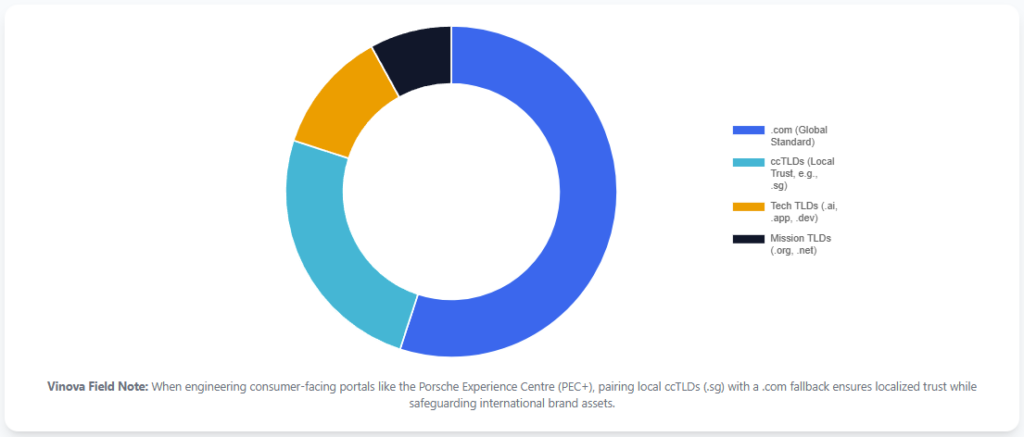
.com remains the undisputed global gold standard for universal trust and memory, but if it’s taken, several alternatives genuinely work:
- .com: the ultimate choice for international trust, commercial authority, and effortless recall
- Industry-specific TLDs: .ai (AI and tech), .app or .dev (software products), .store or .shop (e-commerce)
- Mission and community TLDs: .org (nonprofits, open-source, community groups), .net (tech infrastructure and service providers)
- Country-code TLDs (ccTLDs): .sg, .uk, .de, .ca signal strong local commitment and build immediate regional credibility
Vinova field note: when engineering consumer-facing portals like the Porsche Experience Centre (PEC+) booking platform, or regional government systems, pairing a local ccTLD (like .sg) with a primary .com fallback protects localised trust while safeguarding international brand assets across global markets.
(Note: While search engines don’t give .com a direct algorithmic boost, everyday users default to trusting it, which improves click-through rates).
2. Avoid Hyphens, Numbers, and Special Characters
Hyphens and numbers introduce friction and user error. Tell someone about best-coffee-shop.com and they’ll inevitably type bestcoffeeshop.com and land on a competitor’s page instead. Numbers create the same confusion: type the numeral 5 or spell out “five”? Stick strictly to standard letters (A to Z) for maximum clarity.
Hyphens also severely damage word-of-mouth marketing. Explaining a hyphenated domain over a phone call, podcast, or casual conversation creates friction, and users will instinctively type the name without the hyphen, sending traffic directly to a competitor.
3. Build a Unique, Brandable Identity
Rather than a generic descriptive phrase, prioritise a brandable name that builds long-term equity. Names like Spotify, Notion, or Loom are distinctive, short, and easily recognised by both human audiences and AI discovery algorithms.
- Reflect core values: choose words that convey your brand’s energy, tone, or value proposition
- Combine terms or portmanteaus: blend two meaningful concepts into a fresh term
- Keep it simple: aim for 2-3 syllables that feel natural to say aloud.
- Avoid deliberate misspellings: Dropping vowels or altering standard spellings (e.g., typing
Somethng.cominstead ofSomething.com) might help you land an available name, but it causes permanent word-of-mouth confusion and leaks user traffic to the correctly spelled domain.
4. Pass the “Radio Test” (Voice and Speech Friendly)
With voice search, AI assistants, and podcasts driving discovery, your domain needs to pass the Radio Test: if spoken aloud once, can someone spell and type it accurately without asking for clarification?
- Eliminate silent letters and unusual spellings: avoid clever swaps like “Kool” instead of “Cool”
- Avoid homophones: steer clear of words that sound identical to others (their/there, right/write, byte/bite)
- Test with a friend: say the name aloud on a phone call. If they ask “how do you spell that?”, rethink it
5. Research Availability and Trademark Protections
Before falling in love with a name, do the due diligence to avoid legal disputes and brand confusion.
- Domain registrar availability: use established registrars (Namecheap, GoDaddy, Instant Domain Search) to verify the domain is free
- Trademark registries: search official databases (USPTO, WIPO, regional trademark offices) to make sure your name doesn’t infringe on existing rights
- Social media synergy: confirm matching or close handles are available on major platforms (X, LinkedIn, Instagram, YouTube, TikTok).
- Domain history check (Wayback Machine): Run prospective names through Archive.org. If an available domain was previously used as a spam farm, adult portal, or black-hat SEO network, it may carry lingering search engine penalties that hamper your indexing from day one.
6. Leverage Modern Domain Discovery Tools
If you hit a creative block, AI-powered name generators can help explore combinations and available alternatives.
- Instant Domain Search: real-time availability checks across hundreds of TLDs as you type
- Lean Domain Search: pairs core keywords with popular brand prefixes and suffixes
- Namelix and Looka: AI-driven tools generating short, brandable names and logo ideas from your seed concepts
- DomainWheel: uses AI to suggest creative synonyms, rhymes, and related industry terms
7. Balance Brand Identity with Relevant Keywords
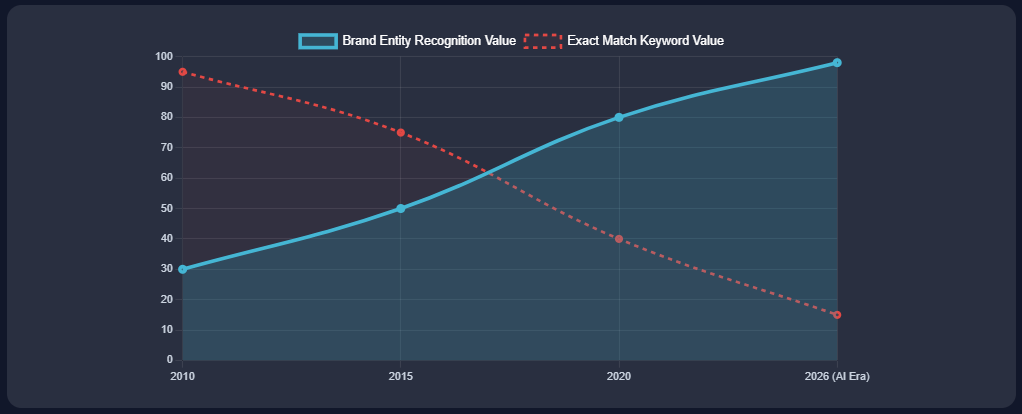
Direct “exact-match domain” keyword boosts have largely been replaced by brand authority and entity trust in modern search algorithms and AI answer engines. Still, a clean, relevant term can give visitors instant context.
- Prioritise brand first: choose ApexBakery.com over generic keyword-stuffed strings like BestCheapBakeryNearMe.com
- Use broad niche identifiers: if adding a keyword, keep it high-level (Studio, Labs, Health, Capital)
- Avoid keyword stuffing: an overloaded domain looks spammy and damages credibility
Vinova field note: having designed large-scale unified search platforms like Navig8 Connect and the IPOS Workbench, we see firsthand how search engines index brand entities in structured knowledge graphs. A distinct, authoritative brand name backed by genuinely good content outperforms a generic keyword-stuffed domain, which increasingly risks tripping spam algorithms rather than gaming them.
8. Keep It Short and Concise
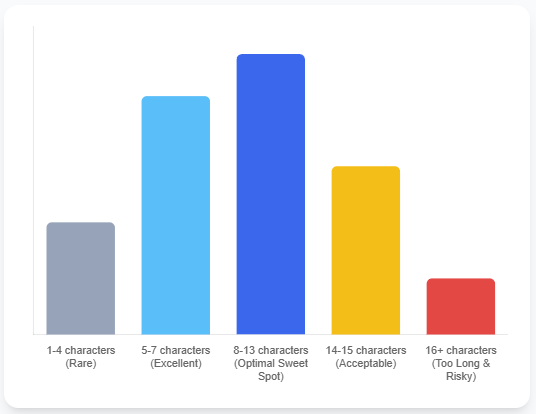
Short names are easier to type on mobile keyboards, less prone to typos, and look cleaner on printed materials. Aim for 15 characters or fewer excluding the extension. The most successful global domains tend to average between 8 and 13 characters.
Remember that your domain name dictates your corporate email ecosystem. A 22-character domain forces employees into lengthy addresses like alexander@yourlongcompanyname.com, increasing typing errors and bounced emails in day-to-day operations.
9. Target Geographic Markets Strategically
If your business targets a specific country or region, localising your extension or name reinforces trust there. Use a ccTLD (.co.uk, .de, .ca, .sg) to signal local operation and regional compliance. If you’re operating globally, stick to a primary .com and use geotargeted landing pages or subdomains for international branches instead.
10. Act Fast to Secure Your Chosen Name
Desirable domain names get registered continuously, worldwide, every day. Once you select the domain name that fits your brand criteria, register it immediately. Waiting a week to “think it over” before you choose domain name registration is exactly how someone, or an automated domain bot, ends up owning it before you do.
Furthermore, when it comes to secure your domain:
- Identify buyable vs. off-limits domains: If your ideal domain is registered, visit the URL. If it displays an ad feed, registrar placeholder, or dead page, it is likely parked by an investor and can be acquired. If it belongs to an active operating business, pivot to a new name immediately rather than wasting time trying to buy out an active entity.
- Explore domain financing: Premium parked
.comdomains priced at $1,000–$5,000 can often be acquired through 12-to-24-month lease-to-own programs via brokers, allowing you to secure the asset without depleting upfront seed capital.
11. Avoid Double Letters
Concatenating words that end and start with the same letter creates visual confusion and typing mistakes. CoolCats.com or PressStart.com can easily lead users to accidentally omit or add a letter (colcats, presstart). Choose alternate word combinations or synonyms that separate repeating consonants or vowels for a smoother visual flow.
12. Register Core Variations and Protect Your Brand
Protect your digital footprint by securing key variations of your primary brand name against typosquatting, impersonation, and lost traffic.
- Register common misspellings: redirect them directly to your primary domain
- Secure key TLDs: hold the .com, .net, and your local ccTLD to stop competitors registering adjacent names
- Enable enterprise security standards: activate Registrar Lock, DNSSEC, two-factor authentication, and WHOIS privacy protection
Vinova field note: under ISO 27001 information security protocols and the DevSecOps governance frameworks Vinova runs for government and banking clients, managing DNS zone files, CAA records, and registrar credentials requires the same strict access control discipline as any other production system. A hijacked domain is a security incident, not a support ticket.
13. Understand How Search Engines and Browsers Actually Trust Your TLD
Choosing the right extension is only half the story, understanding how it gets treated matters too. Google has stated repeatedly that newer generic TLDs (.app, .dev, .io) rank exactly the same as .com when content quality is equal, but two practical differences still catch people out:
- .app and .dev domains require HTTPS by default (they’re on the HSTS preload list), which is a security positive but means your hosting setup needs SSL configured correctly from day one, or the site won’t load at all
- Some corporate firewalls and email security filters still flag less common TLDs more aggressively than .com, worth testing before you commit if a large share of your audience is in enterprise environments
- Search engines treat TLDs equally in code, but human behavior creates real ranking impacts. If searchers scroll past an unusual TLD to click a recognizable
.com, or bounce back to search results because a TLD looks unfamiliar, those user engagement metrics signal low relevance to search algorithms.
The extension itself won’t hurt your SEO. How reliably it resolves and how it’s treated by security software in your specific audience’s environment is the part actually worth checking first.
14. Future-Proof Your Domain Name
Choose a domain that accommodates long-term growth. A name like SeattlePhoneCases.com works fine until you expand into tablet accessories or open locations nationwide, at which point it actively restricts your brand messaging. Choose something broader that scales with you.
Many successful startups launch on an affordable alternative (such as a $10–$20 prefixed .com like Get[Brand].com or an industry TLD like .io), validate product-market fit and revenue, and then negotiate to acquire the exact-match primary .com later once capital permits.
Vinova field note: over 16+ years building and maintaining enterprise software ecosystems, including EM Services’ Gofix FM facility management platform and Navig8’s global shipping portal (an 8+ year partnership), we plan digital architecture for 5 to 10 year horizons as standard practice. Rebranding a live domain connected to web portals, native iOS/Android apps, SAP integrations, and third-party APIs is a genuine engineering migration project with real security risk, not a quick DNS change.
15. Ensure Full Ownership Control
- Register the domain under your personal or corporate account, never a third-party contractor’s or agency’s private account
- Enable auto-renewal with an active corporate payment method to prevent unintended expiration and domain loss
- Maintain accurate administrative contact details to actually receive renewal and security notices
| Building the Website That Goes Behind That Domain? Once your domain is locked in, the harder part starts: the actual site. Vinova’s team can help you plan an architecture that won’t force a costly rebuild in five years. Book a free 2-hour consultation with our Singapore-based team. No commitment required. Book Your Free Web Strategy Consultation with Vinova |
Website Domain Name FAQ
What is the ideal domain name length?
Aim for under 15 characters excluding the extension. Shorter names are easier to remember, simpler to type on mobile, and significantly less prone to spelling errors, the most successful global domains tend to sit in the 8 to 13 character range.
How is domain selection different for a personal website versus a business?
For choosing a domain name for a personal website, using your actual name (firstname-lastname.com or a close variant) is usually the strongest long-term choice, since it doesn’t need to signal a business category and stays relevant no matter how your focus shifts over the years. Business domain selection carries more constraints, brand consistency across platforms, trademark clearance, and the future-proofing concerns in Tip 14 all matter more when a company, not just an individual, is building equity in the name.
How To Choose A Domain Name For SEO Specifically?
Don’t over-optimise for it. Exact-match keyword domains lost most of their direct ranking advantage years ago, and today they mostly just look dated or spammy. What actually helps SEO is a memorable, brandable name that earns backlinks and repeat direct traffic naturally, paired with genuinely good content. If you’re deciding between a clean brand name and a keyword-stuffed alternative purely for SEO reasons, pick the brand name; the content on the site will do the SEO work the domain used to.
Can I change my domain name in the future?
Technically yes, through 301 redirects, but it requires careful migration planning. Domain changes can temporarily affect search engine indexing, brand awareness, and backlink authority. It’s far better to invest the time to get the choice right on day one than to migrate later.
What should I do if my preferred .com is already taken?
- Add clean action prefixes/suffixes:
Get[Brand].com,Try[Brand].com,Play[Brand].com, or[Brand]HQ.com. - Explore modern TLDs: Reputable industry extensions like
.ai,.app,.co, or.store. - Check the aftermarket: Use WHOIS or domain brokers to evaluate if the owner is open to a outright sale or a lease-to-own financing arrangement.
| Vinova: Singapore’s web engineering and digital strategy partner since 2010. ISO 27001:2022 and ISO 9001:2015 certified. 300+ successful projects delivered for 250+ global clients, from Singapore government agencies (GovTech, MAS, SP Group, SIT, IPOS) to multinational brands (Porsche Experience Centre, Navig8, EM Services) and high-growth startups. End-to-end web engineering, mobile development, cloud architecture, and DevSecOps. Financial Times Top 500 High-Growth Companies Asia-Pacific 2026. The Straits Times Singapore’s Fastest-Growing Companies 2024, 2025, and 2026. Learn more. |