In the 2026 digital economy, a web application is no longer just a static touchpoint. It is an intelligent, dynamic ecosystem. Whether building a complex enterprise platform to support a low-carbon future, a high-consequence compliance portal for public sector initiatives, or an interactive digital campus for SIT, effective web design now directly impacts AI-readiness, security, and enterprise efficiency.
At Vinova, 16+ years delivering over 300 successful projects across the APAC region has taught us that strong web design is no longer just about visual aesthetics or basic responsiveness. It requires a fusion of AI-augmented Design Thinking, composable frontend engineering, Zero-Trust security, and hyper-personalised user architecture. Below, our senior solution architects and UI/UX designers outline the top 10 web design mistakes organisations make in 2026, and how to fix them using Vinova’s field-tested, AI-first digital engineering methodology.
Table of Contents
Key Takeaways:
- Prioritize Data-Driven Discovery: Avoid relying on outdated assumptions; integrate AI-augmented Design Thinking and predictive analytics during the initial Discovery Phase to ensure business logic aligns with actual user intent.
- Adopt Composable and Adaptive Architecture: Move beyond static design by implementing omnichannel, responsive frameworks and composable (MACH) architecture, which decouples the frontend from legacy backends to allow for rapid, modular updates.
- Embed Performance and Accessibility: Treat accessibility (WCAG 2.2/3.0) and sustainable, edge-rendered performance as non-negotiable mandates rather than afterthoughts, utilizing automated CI/CD pipelines for continuous compliance and efficiency.
- Shift to Continuous, Intelligent Improvement: Replace the “launch and forget” mindset with an iterative predictive analytics loop, using AI-driven tools to continuously optimize user journeys, personalize content dynamically, and catch friction points in real-time.
1. Designing Without AI-Augmented Discovery and Persona Mapping
The mistake: relying solely on static, outdated user assumptions and jumping directly into UI development without leveraging data-driven behavioural insights.
The Vinova perspective: in 2026, building a product on gut feeling is a costly risk. Visual beauty cannot save an application that solves the wrong problem.
How to fix it: integrate AI-augmented Design Thinking into your Agile workflow. At Vinova, every project begins with a structured Discovery Phase and Sprint 0. We use predictive analytics and generative AI tools to rapidly synthesise user research, map complex journey workflows, and build interactive wireframes, ensuring total alignment between business logic and user intent before a single line of code is written.
2. Ignoring Omnichannel, Foldable, and Spatial Viewports
The mistake: designing only for standard desktop monitors and standard mobile glass, ignoring the rising market share of foldable devices, ultra-wide enterprise dashboards, and early spatial computing interfaces.
The Vinova perspective: enterprise workflows in 2026 happen across a highly fragmented device landscape.
How to fix it: adopt an omnichannel fluid design system. Use modern responsive grid frameworks (CSS Subgrid, Tailwind CSS v4) and fluid typography with relative container queries. Ensure touch targets adapt dynamically to the device, providing an effortless experience whether the user is on an iPad, a foldable smartphone, or a desktop workstation.
3. Treating Accessibility (WCAG 2.2 / 3.0) as an Afterthought
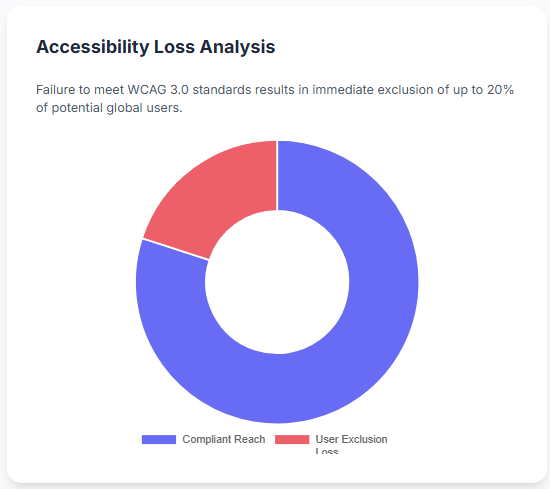
The mistake: failing to accommodate users with impairments by ignoring the strict requirements of WCAG 2.2 (and the incoming WCAG 3.0 draft), leading to legal liability and excluded demographics.
The Vinova perspective: in public sector projects like GovTech and global enterprise standards, accessibility is a non-negotiable mandate, not a nice-to-have.
How to fix it: implement AI-assisted accessibility auditing. Design for high-contrast colour ratios, enforce visible focus indicators, and support emerging AI screen readers. Vinova runs automated accessibility pipelines in CI/CD to ensure continuous compliance without slowing down feature delivery.
4. Bloated Codebases, Slow Edge Rendering, and High Carbon Footprints
The mistake: overloading pages with heavy JavaScript bundles and unoptimised assets, resulting in poor Core Web Vitals, slow loading, and a high energy and carbon cost.
The Vinova perspective: performance is synonymous with sustainability. As demonstrated in our initiatives for smart energy, Green IT is a serious corporate priority in 2026, not just a sustainability slogan.
How to fix it: adopt sustainable, edge-rendered frontend engineering: transition to edge computing frameworks (Next.js or Angular with SSR/SSG), serve next-gen image formats (AVIF, WebP), and optimise for Generative Engine Optimisation (GEO) so AI agents and LLMs can crawl your site efficiently, reducing server load and improving visibility in AI-driven search.
5. Forcing Users Through Deep Menus Instead of Conversational UI
The mistake: burying key enterprise features under deep, multi-tiered mega-menus that require high cognitive load to navigate.
The Vinova perspective: modern users expect the platform to do the heavy lifting. If a user needs five clicks to find a report, the architecture has failed, not the user.
How to fix it: blend standard navigation with RAG-powered conversational UI. Group related functionality into intuitive micro-frontend modules, but supplement global navigation with secure, AI-powered natural language search, letting users ‘chat’ with the platform to instantly surface deep links, reports, or data actions.
6. Relying on Outdated Passwords and Friction-Heavy Forms
The mistake: using traditional password-based logins and complex, multi-step data entry forms that damage user trust and expose the platform to phishing attacks.
The Vinova perspective: in compliance-heavy industries like fintech and government, secure authentication must be seamless, not just secure on paper.
How to fix it: transition to passwordless auth and Zero-Trust UX. Implement FIDO2/Passkeys (biometrics via FaceID/TouchID) to eliminate password friction. For forms, provide real-time, AI-assisted inline validation, safeguard user input against OWASP Top 10 risks, and preserve secure draft states at the edge so users never lose data.
7. Static Calls-to-Action Instead of Dynamic Personalisation
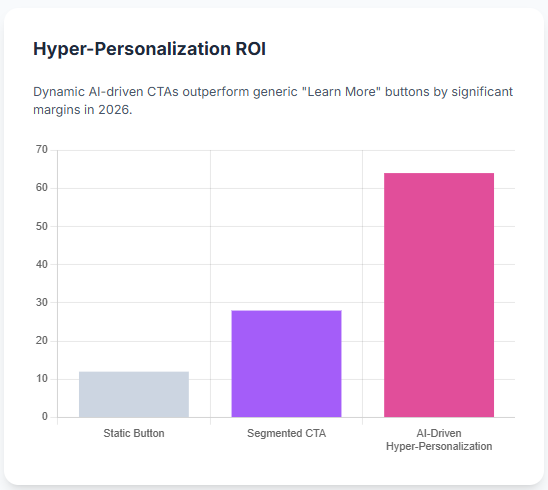
The mistake: serving the exact same generic CTAs (‘Submit’, ‘Learn More’) to every user, regardless of past behaviour or current context.
The Vinova perspective: 2026 design is about context. Every screen should adapt its guidance based on what the user is most likely trying to achieve.
How to fix it: deploy AI-driven hyper-personalisation. Use predictive models to dynamically adjust CTA copy, colour hierarchy, and dashboard widgets based on the user’s persona, time of day, and previous interactions.
8. Siloed QA Without Autonomous Testing Agents
The mistake: waiting until the end of the sprint for manual User Acceptance Testing, causing bottlenecks and missing edge-case UI bugs.
The Vinova perspective: the speed of modern development requires QA to be continuous, autonomous, and intelligent, not a gate at the finish line.
How to fix it: incorporate autonomous AI QA testing. Vinova’s Agile workflow uses AI developer agents and AI-augmented Playwright scripts to automatically simulate thousands of user journeys per hour, catching UI/UX friction and visual regressions instantly during the CI/CD pipeline.
9. Monolithic Architectures Blocking Innovation
The mistake: building frontends tightly coupled to legacy backends, where a simple UI update requires a high-risk, full-system redeployment.
The Vinova perspective: to stay competitive, enterprise platforms, like Vinova’s Gofix FM platform built for EM Services, must be agile, scalable, and API-first.
How to fix it: adopt AI-ready composable architecture (MACH). Develop headless, reusable UI component libraries using ReactJS or Angular and share design tokens via scalable design systems. This decouples the frontend UI from backend business logic, allowing rapid feature rollouts and seamless integration with third-party enterprise tools like SAP or SuccessFactors.
10. The ‘Launch and Forget’ Mindset
The mistake: treating a website launch as a finalised project rather than day one of a living digital asset.
The Vinova perspective: user behaviour and technology shift rapidly. Continuous improvement based on real-time telemetry is essential for long-term ROI, not an optional add-on service.
How to fix it: establish an iterative predictive analytics loop. Move beyond basic tracking by combining qualitative user feedback with AI-driven analytics (GA4 predictive audiences, automated heatmapping) to preemptively identify conversion drop-offs, optimise funnels, and refine the UX continuously post-launch.
Vinova’s 2026 Web Engineering and AI Toolkit
The stack Vinova’s solution architects reach for when fixing these web design mistakes in practice:
| Category | Recommended Tools and Frameworks |
| UX/UI and prototyping | Figma (with AI features), Vercel v0, FigJam for Agile Sprint 0 |
| Frontend architecture | ReactJS / Next.js, Angular, Tailwind CSS v4, micro-frontends |
| Performance and sustainability | Edge rendering, Green Web Foundation standards, LLMO/GEO auditing |
| Automated QA and security | Playwright (AI-augmented), Passkeys/FIDO2, OWASP ZAP, GitHub Copilot / Cursor |
| Analytics and search | GA4 (predictive analytics), RAG-powered search, PostHog |
Tools to Diagnose Web Design Mistakes on Your Own Site
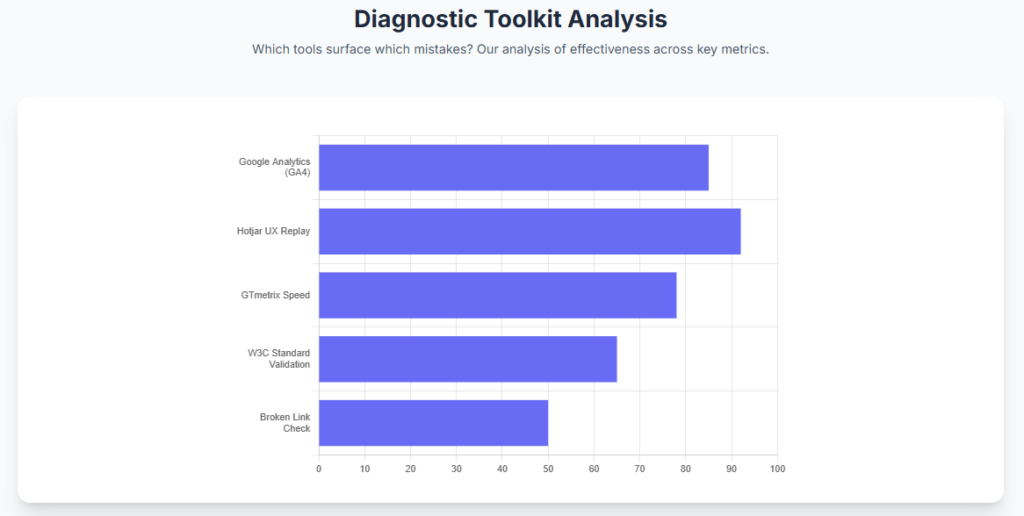
Before committing to a redesign, it’s worth knowing exactly where your current site is losing users. These five tools surface the specific web design mistakes costing you conversions and compliance:
| Tool | What It Surfaces |
| Google Analytics (GA4) | High bounce rates, low engagement pages, and drop-off points across the user journey |
| Hotjar | Heatmaps and session recordings showing exactly where users click, scroll, and abandon a flow |
| GTmetrix and Lighthouse | Core Web Vitals, page load speed, and actionable performance, accessibility, and SEO scores |
| W3C Validator | HTML and CSS standards violations that can silently break rendering or accessibility |
| Broken Link Checker | Dead links and 404 errors that quietly erode both user trust and SEO equity |
| Fix Your Web Design Mistakes with Vinova Book a complimentary 2-hour web platform audit with Vinova’s Singapore-based team. We’ll assess your current site against these 10 mistakes, benchmark your Core Web Vitals and accessibility compliance, and scope a modernisation plan. No commitment required. Schedule Your Free 2-Hour Web Platform Audit with Vinova |
Web Design Mistakes FAQ
What is the single most costly web design mistake enterprises make in 2026?
Skipping AI-augmented discovery and persona mapping. Every other mistake on this list, from static CTAs to monolithic architecture, compounds a wrong initial assumption about what users actually need. Fixing a slow page load or a confusing menu on a platform built around the wrong use case is optimisation on a broken foundation. The highest-leverage fix is always upstream: get the Discovery Phase right, and several of the other nine web design mistakes become far less likely to happen in the first place.
How do web design mistakes differ for public sector platforms versus commercial websites?
Public sector platforms, like GovTech-adjacent systems, treat accessibility (WCAG 2.2/3.0 compliance), Zero-Trust security, and audit-ready compliance logging as non-negotiable requirements from day one, not features to add if budget allows. Commercial websites have more flexibility to prioritise conversion optimisation and personalisation first. The underlying web design mistakes are often the same technical failures (deep menus, bloated codebases, launch-and-forget maintenance), but the consequence differs: a commercial site loses conversions, while a non-compliant public sector platform creates legal liability and excludes citizens who depend on the service.
How much does fixing common web design mistakes typically cost?
It depends heavily on which mistakes are present and how deeply they’re embedded in the architecture. Surface-level fixes (CTA personalisation, accessibility auditing, broken link cleanup) can often be addressed within a focused sprint or two. Structural mistakes (monolithic architecture blocking API-first integration, a codebase too bloated to hit Core Web Vitals targets) usually require a phased modernisation, frequently using the Strangler Fig pattern to migrate incrementally without a risky full rebuild. Vinova’s audit phase identifies which category applies before scoping a quote.
Can these web design mistakes be fixed without a full website rebuild?
Most of them, yes. Composable, API-first architecture (Mistake 9) is specifically designed to make this possible: once the frontend is decoupled from legacy backend logic, individual mistakes like weak accessibility, static CTAs, or slow edge rendering can be fixed module by module rather than requiring a full-system redeployment. The one mistake that’s hardest to retrofit is the monolithic architecture itself; that’s the one structural fix that tends to unlock faster resolution of everything else on this list.
How often should a business re-audit its website for these web design mistakes?
At minimum annually, and after any major platform migration, redesign, or significant traffic pattern shift. Mistake 10, the ‘launch and forget’ mindset, is itself one of the ten mistakes for a reason: user behaviour, device landscapes, and AI search crawling standards all shift faster than most organisations revisit their site. Vinova’s iterative predictive analytics loop is designed to catch drift continuously rather than waiting for an annual audit to surface a problem that’s been compounding for months.
| Vinova: Singapore’s web design and AI-first digital engineering partner since 2010. ISO 27001:2022 and ISO 9001:2015 certified. WCAG, PDPA, and GovTech IM8 aligned. 300+ in-house engineers across Singapore, Hanoi, Da Nang, and Ho Chi Minh City. Web engineering clients include SP Group, GovTech Singapore, MAS, SIT, and EM Services. Financial Times Top 500 High-Growth Companies Asia-Pacific 2026. The Straits Times Singapore’s Fastest-Growing Companies 2024, 2025, and 2026. Explore Vinova’s web design and engineering services. |