In today’s Apple ecosystem, working with a professional iPhone app development company is essential to navigate strict App Store compliance, UI standards, and performance optimization requirements. These constraints significantly affect the scalability and reliability of modern mobile applications.
Key Takeaways:
- Apple mandates the use of iOS 26 SDK/Xcode 26 starting April 2026.
- Over 40% of App Store rejection errors are related to Guideline 2.1.
- Vinova’s hybrid onshore-offshore model helps save up to 70% in costs.
- Vinova has delivered 300+ projects for 250+ clients worldwide.
Table of Contents
iOS/iPhone Application Development Challenges
Deploying high-performing, secure mobile solutions in the modern iOS ecosystem requires navigating strict technical, architectural, and regulatory constraints. For corporate innovation officers, startup founders, and enterprise product managers seeking to partner with a leading iPhone app development company in Singapore, these engineering realities shape project lifecycle trajectories and long-term asset value. Developing for the Apple ecosystem in 2026 has become increasingly demanding. Successful execution requires addressing complex development constraints across compatibility, App Store compliance, and UI rendering performance.

iOS Application Compatibility
The baseline challenge in modern iOS engineering is ensuring flawless execution across a fragmented field of hardware architectures and operating system versions. To maintain compatibility with modern SDKs, applications must adopt Swift 6’s strict concurrency rules, which guarantee complete compile-time data-race safety.
The transition to Swift 6 has shifted concurrency verification from a runtime testing mechanism into strict, compiler-enforced assertions. The compiler checks that variables crossing thread boundaries conform to the Sendable protocol, that mutable state is tightly isolated inside defined Actors, and that user interface modifications are strictly bound to the @MainActor.
In 2026, the transition of legacy applications from earlier Swift runtimes or Combine reactive streams requires systematic code refactoring. Navigating this complex shift is why many enterprises consult an experienced iPhone app development company to ensure seamless, concurrency-safe builds.
Pragmatic development mitigation involves adopting Swift 6.2 and 6.3’s approachable concurrency defaults. This configuration isolates execution paths to the @MainActor by default unless parallel execution is explicitly requested with concurrent attributes.
Furthermore, development teams must compile builds using the modern iOS 26 SDK via Xcode 26, which is mandatory for all new App Store submissions and updates starting in April 2026. This mandate forces the immediate modernization of legacy codebases, requiring developers to resolve compiler warnings, update aging third-party dependencies, and transition to native async/await patterns.
Architectural Paradigm Shift: Legacy vs. Swift 6 Concurrency
| Compilation Impact | Pre-Swift 6 / Legacy Concurrency | Swift 6.2+ / Modern Concurrency | Effect |
| Concurrency Checking | Minimal build-time checks; runtime race tracking | Strict compile-time checks (SWIFT_STRICT_CONCURRENCY=complete) | Converts intermittent runtime crashes into compile-time issues |
| Data Safety | Shared mutable reference types across background threads | Enforced Sendable validation and actor isolation | Prevents data-race memory corruption and thread collisions |
| UI Synchronization | Manual DispatchQueue.main.async dispatch routing | Strict compile-time @MainActor declaration | Eliminates layout rendering warnings and UI freezes |
| Thread Management | Dynamic OS-level thread creation and blocking | Cooperative thread pool managed by structured tasks | Prevents system thread starvation and optimizes battery usage |
Apple App Store Approval
Securing App Store approval has transitioned from a routine metadata check into a rigorous technical and security review process. On average, over 40% of unresolved app delays are caused by Guideline 2.1 (App Completeness), which addresses runtime crashes, unresponsiveness, placeholder layouts, and non-functional buttons.
Automated static and dynamic analyses run by Apple are highly sensitive, and the criteria have tightened across several regulatory verticals:
- Guideline 4.3(b) Low-Quality and Saturated Categories (Updated June 2026): Apple has updated its spam rules to restrict or remove low-effort, templated, or “vibe-coded” applications within oversaturated niches (including basic utility flashlights, simple timers, soundboards, and simple dating tools). New submissions in these categories are rejected unless they demonstrate highly differentiated, complex native value. This high barrier to entry is why working with a specialized iPhone app development company is crucial for approval success.
- Mandatory AI Consent Rules (November 2025): Applications transmitting user telemetry, documents, or inputs to external artificial intelligence services (such as OpenAI, Anthropic, or Google Gemini) must display an explicit user-facing consent screen. This modal must name the model provider and detail exactly what data is shared.
- UGC Moderation under Guideline 1.2: Applications featuring user-generated content, chat channels, or interactive forums must implement robust moderation engines, keyword filters, blocking tools, and reporting workflows before submission.
- Data Minimization under Guideline 5.1.1: Gathering personal data (such as birthdates or location data) that is not critical to core application functions leads to automated rejections. Applications that allow account registration must also feature a clear, immediate in-app mechanism for users to delete their accounts and all associated data.
Adaptive and Interactive UX
Modern iOS users expect responsive, adaptive layouts that render seamlessly across multiple device form factors. The engineering challenge lies in SwiftUI’s declarative rendering mechanics. Because SwiftUI structures interfaces as functions of state, any modification of a state variable triggers a view re-evaluation.
If state boundaries are poorly designed, a localized data change can trigger recursive body evaluations across the entire view hierarchy, resulting in layout thrashing and dropped frames.
For iOS hardware supporting 120 Hz ProMotion displays, the rendering budget is exceptionally tight. The engineering team calculates the target frame duration using the following formula:
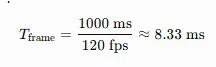
If any operation blocks the main thread (such as running string formatters, parsing JSON payloads, or sorting arrays) for more than 8.33 ms, the system experiences a visible rendering hitch.
To prevent these performance drops, engineering teams must isolate state properties using localized @Observable architectures instead of legacy ObservableObject classes, which trigger recompositions across all observing views for any property change.
Furthermore, developers must avoid using dynamic .id(UUID()) declarations inside lists, which force complete destruction and reconstruction of view hierarchies, leading to degraded scroll performance. A professional iOS development company implements rigorous profiling to prevent such structural issues.
Our iOS App Development Services
As a premier technology consulting powerhouse and an award-winning iPhone app development company, Vinova provides end-to-end mobile app development solutions. The company operates under strict ISO 9001 and ISO 27001 certifications to deliver high-performance, secure software architectures.
Smart Design
The design philosophy at Vinova is a data-driven science that blends behavioral psychology, interactive aesthetics, and strict Human Interface Guidelines. Rather than treating design as visual decoration, Vinova utilizes a structured, 4-stage Double Diamond process (Discover, Define, Develop, Deliver) to map user journeys and remove transactional friction.
Before writing any business logic, cross-functional teams of UI/UX designers and front-end engineers construct high-fidelity, clickable prototypes. Partnering with a skilled iPhone app development company ensures these layouts are fully verified to run at a locked, power-efficient 120 frames per second on real physical target hardware.
Iphone App Optimization
The optimization service ensures that applications run efficiently with a minimal memory footprint and zero thread bottlenecks. Vinova’s engineers utilize Instruments 26 and the next-generation SwiftUI Profiler to trace CPU thread switching, analyze system hitches, and monitor memory allocations in real-time.
To maintain performance throughout active development, our specialized engineers at Vinova, a leading iPhone app development company, integrate an automated, runtime memory-leak detection pipeline. In non-production builds, automated XCTest executions run specialized code assertions that catch retain cycles instantly:
- extension XCTestCase {
- func trackForMemoryLeaks(_ instance: AnyObject, file: StaticString = #filePath, line: UInt = #line) {
- addTearDownBlock { [weak instance] in
- XCTAssertNil(
- instance,
- “Memory leak detected: \(String(describing: instance)) has a strong reference cycle.”,
- file: file,
- line: line
- )
- }
- }
- }
This automated check evaluates every system-under-test (SUT) and mock adapter. The pipeline reports real-time, event-driven memory leak signals directly to a centralized observability dashboard, allowing developers to catch and fix memory leaks early in the testing cycle.
iPhone App Update
Vinova helps organizations modernize legacy, unmaintained iOS applications. This service includes converting older Objective-C structures or Swift 5 codebases into clean, Swift 6-compliant architectures.
By setting compilation parameters to SWIFT_STRICT_CONCURRENCY=complete, Vinova’s migration team identifies potential race conditions, replaces legacy Combine pipelines with async/await, wraps data access layers inside thread-safe actors, and decouples complex ViewModels. This comprehensive restructuring is a core capability of our iPhone app development company to ensure long-term operational stability on newer iOS releases.
Upload to Apple Store
Deploying an application to the App Store requires strict compliance with Apple’s shifting regulatory requirements. Vinova, as an established iPhone app development company, manages the entire App Store Connect lifecycle, ensuring a smooth, zero-delay release process.
The submission team prepares localized metadata, structures in-app purchase sandboxes, and verifies that the system uses required data privacy manifests (PrivacyInfo.xcprivacy). Every build undergoes strict pre-submission review checks to verify that local privacy permissions are fully justified and that all third-party SDK dependencies are digitally signed.
New Trend Features
To keep enterprise applications highly competitive, Vinova’s engineering team integrates the latest iOS platform capabilities:
- App Intents 2.0: Exposing core app features directly to system-level Siri AI searches, shortcuts, and Spotlight surfaces.
- IntentValueQuery: Integrating with physical-world camera inputs via Visual Intelligence to surface relevant contextual in-app resources.
- Interactive App Intents Snippets: Building compact, interactive SwiftUI windows that display and execute processes directly within Siri responses or system search overlays.
- On-Device Artificial Intelligence: Integrating custom local neural network models via CoreML and Create ML, using the device’s Apple Neural Engine (ANE) to ensure low-latency, privacy-centric computations.
Our iOS Application Development Approach
As an elite iPhone app development company in Singapore, Vinova’s delivery model leverages a structured, risk-mitigated five-stage lifecycle. This framework is engineered to align design thinking with strict DevSecOps deployment practices, utilizing the V-Model methodology and Behavior-Driven Development (BDD) to achieve rapid validation and alignment with business objectives.
- ┌─────────────────────────────────┐
- │ 01. Product Discovery │ <– Aligning business goals & technical feasibility
- └────────────────┬────────────────┘
- │
- ▼
- ┌─────────────────────────────────┐
- │ 02. Dynamic UI/UX │ <– Creating clickable, performant prototypes
- └────────────────┬────────────────┘
- │
- ▼
- ┌─────────────────────────────────┐
- │ 03. Custom Engineering │ <– Writing secure, data-race-free code
- └────────────────┬────────────────┘
- │
- ▼
- ┌─────────────────────────────────┐
- │ 04. Continuous QA & CI │ <– V-Model Testing, BDD, and automated leak diagnostics
- └────────────────┬────────────────┘
- │
- ▼
- ┌─────────────────────────────────┐
- │ 05. App Store Release │ <– Securing compliance & metadata reviews
- └─────────────────────────────────┘
iOS App Development Initiation
Every successful software build begins with collaborative research. During the initiation phase, enterprise architects, tech leads, and product managers conduct extensive discovery workshops to align system engineering goals with the client’s business objectives.
The discovery team evaluates user personas, documents critical functional requirements, and runs early feasibility audits on third-party APIs and local system integrations. This planning phase establishes a transparent roadmap, minimizing downstream scope creep and optimizing developer resources.
User-Interface Design and Testing
During the user-interface design phase, Vinova’s creative specialists build high-fidelity wireframes and design libraries. The visual layouts are optimized for accessibility, touch target parameters (ensuring buttons meet the physical minimum of a 44 x 44 point threshold), and responsive rendering across diverse screen aspects.
These visual designs are translated into interactive, compiled layout templates, allowing the engineering team to verify that complex rendering work is offloaded from the main thread before any database code is written.
Specialized iOS Custom Development Process
The core coding phase utilizes a highly decoupled Clean Architecture pattern (such as MVVM-C or Clean Swift). Vinova’s engineers build secure, maintainable native layers, separating networking, local storage, and UI states into independent modules. When you hire an enterprise-grade iPhone app development company, you secure these strict engineering standards:
- State Management: ViewModels are isolated to the @MainActor to prevent multi-threaded state mutations.
- Network & Database Isolation: Local database managers and network connections are wrapped inside dedicated Swift Actors, eliminating race conditions.
- Dependency Injection: Code structures are built with clear protocols to ensure easy maintenance and mock testing.
iOS App Code Generation and Finalization
To accelerate project delivery without compromising code quality, Vinova’s developers work alongside advanced generative AI tools. By utilizing Cursor, Claude, and GitHub Copilot, developers delegate repetitive boilerplate code generation to AI systems.
This allows developers to spend their time on critical tasks, such as system architecture, security protocols, complex API configurations, and custom business logic. Every block of generated code must pass strict static analysis, compiler verification, and security vulnerability reviews.
App Store Submission and Optimization
Before public release, the app is put through a comprehensive pre-submission audit. The team conducts a complete “reviewer run” on clean physical devices, ensuring zero-cache fresh installations work flawlessly under restricted or flaky network conditions.
The team verifies that:
- Every third-party SDK is signed and has its respective privacy manifest compiled inside the main bundle.
- App Store product page metadata, screenshots, and privacy nutrition labels are accurate.
- Live backend environments are stable and reachable by App Store reviewers during their testing window.
iOS App Maintenance and Support
For enterprise applications, launch day is just the beginning of the lifecycle. Vinova provides structured ongoing maintenance and support packages. This phase includes continuous cloud system monitoring, automated crash log telemetry parsing, and swift defect resolution.
As Apple periodically updates its operating systems and security baselines, Vinova provides continuous code updates and security patches to keep your application highly performant and compliant with the latest Apple Developer Program standards.
Tools and Platforms We Use In iOS App Development
Vinova maintains standardized environments utilizing top-tier platforms, frameworks, and deployment engines. This robust technical stack ensures that your custom application is secure, highly scalable, and optimized for performance, reflecting the level of engineering depth expected from a leading iPhone app development company contender.
AI Technologies
To power modern, intelligent features, Vinova integrates advanced AI technologies:
- Development Assistants: GitHub Copilot, Claude, and Cursor for high-velocity code generation.
- On-Device & Agentic AI: CoreML, Create ML, and LangGraph / CrewAI for orchestrating autonomous testing flows.
- Natural Language Processing: Custom NLP chatbots integrated seamlessly with corporate systems (as deployed for SSDC and the Porsche Experience Centre).
Front-end Technologies
Vinova’s front-end stack encompasses both native and versatile cross-platform frameworks to meet specific B2B business needs:
- Native iOS: SwiftUI for declarative interface composition, paired with UIKit to handle complex native rendering patterns.
- Cross-Platform: Flutter (used to build over 90 successful projects for global enterprises like Samsung and FWD) and React Native for efficient, multi-platform code reuse.
App Development
The development environment is optimized for safety and precision:
- IDE & Languages: Xcode 26, supporting Swift 6.2 and Objective-C.
- Test Automation: XCTest framework for unit, integration, and UI automation, alongside Instruments 26 for deep CPU, memory, and UI lag profiling.
Cloud Computing
To build reliable backend foundations, Vinova relies on secure, elastic cloud infrastructure:
- Infrastructure: Amazon Web Services (AWS) and Microsoft Azure with automated provisioning of high-availability compute and database instances.
- API Management: Azure API Management for centralized gateway control and unified access monitoring.
DevOps
Vinova embeds security directly into the deployment process using mature DevSecOps pipelines:
- CI/CD Platforms: GitLab CI, GitHub Actions, and Jenkins.
- Security & Testing: Secure Software Development Lifecycle (Secure SDLC) systems running automated Test-Driven Development (TDD) suites, security vulnerability assessments, and automated compliance reporting.
Database Access
Local and cloud databases are architected for fast retrieval and data security:
- Local Caching: SwiftData, CoreData, and SQLite.
- Enterprise Cloud Databases: AWS RDS Aurora, PostgreSQL, and Elasticsearch for real-time telemetry analytics.
Our Advanced Technologies
Vinova stays at the forefront of innovation, helping B2B enterprises leverage emerging technologies to drive digital transformation.
Artificial Intelligence (AI)
Vinova actively promotes itself as an “AI-first” partner. Their internal automation and regression testing workflows rely on GitHub Copilot, Cursor, and Playwright.
Cloud Computing
To build scalable backend platforms, Vinova constructs containerized, microservices-based architectures. Utilizing Docker and Kubernetes, services are split into independent, modular containers that scale automatically based on demand.
The team designs event-driven architectures to handle high-frequency concurrent traffic spikes without degrading core application performance.
Blockchain
As an experienced Web3 mobile app developer, Vinova engineers secure, decentralized applications. The blockchain division develops, audits, and deploys robust smart contracts across public networks (such as Ethereum and Solana) and permissioned private blockchains (like Hyperledger Fabric and Corda).
This ensures complete transaction finality, immutability, and programmatic compliance for DeFi, global remittance, and asset tokenization platforms.
Big Data
Vinova constructs enterprise data storage solutions and provides extensive Data Engineering pipeline services. High-throughput streaming pipelines are built using technologies like Amazon Kinesis, Apache Kafka, or AWS Glue, allowing businesses to capture real-time system performance insights, user interactions, and anomalous security patterns instantly.
Computer Vision
Vinova implements high-speed, on-device machine learning models for processing visual data. The engineering team builds custom offline OCR (Optical Character Recognition) engines that run locally on the device.
These systems process, extract, and digitize printed or handwritten text directly through the iPhone’s camera, ensuring 100% data privacy and offline operational stability.
AR VR
To build immersive spatial computing applications, Vinova develops custom modules for visionOS and ARKit. By leveraging the high-performance rendering capabilities of Apple hardware, the team builds interactive training tools, virtual real estate tours, and advanced spatial visualization apps designed for both iOS devices and the Vision Pro headset.
Building iPhone Apps for Various Industries
Every commercial sector operates under unique operational workflows, system integration complexities, and compliance standards. Vinova engineers custom iOS solutions designed to meet the strict technical and regulatory demands of diverse industries.
Business Apps
Enterprise B2B environments require robust systems that integrate directly with existing corporate directories, customer relationship platforms, and ERP suites (such as Odoo Enterprise).
Vinova designs customized enterprise mobile applications that streamline internal logistics, automate workflows, and synchronize offline field data with cloud databases, improving operational efficiency.
Finance iOS Apps
Mobile finance and payment applications in Singapore operate under strict regulatory scrutiny. Vinova constructs secure FinTech applications that adhere to the Technology Risk Management (TRM) Guidelines and Cyber Hygiene Notice 655 issued by the Monetary Authority of Singapore (MAS).
To build resilient, compliant financial software, the development team implements rigorous security standards:
- Segregation of Duties: Implementing clear administrative boundaries where system administrators do not have access to data encryption keys.
- Two-Factor Authentication (2FA): Enforcing secure, phishing-resistant multi-factor login protocols for online transactions.
- Encryption Key Management: Storing and rotating encryption keys within dedicated hardware security modules (HSMs) rather than standard software layers.
- Continuous Monitoring: Routing API transactions through high-performance logging pipelines to detect and alert on anomalous activity in real-time.
Health & Fitness Apps
Medical and clinical healthcare software requires robust data security architectures. Vinova engineers custom HealthTech systems that comply with global data privacy frameworks like HIPAA and the Personal Data Protection Act (PDPA) of Singapore.
To comply with Apple’s strict Guideline 5.1.3, the development team implements secure, local data isolation:
- Zero Cloud Bleed: User clinical records, HealthKit datasets, and fitness metrics are strictly isolated and never stored in iCloud or transmitted to third-party ad networks.
- Push Notification Controls: Sensitive or protected health information (PHI) is excluded from push notifications under Guideline 4.5.4.
- Ethics Approvals: ResearchKit implementations are constructed alongside documented Institutional Review Board (IRB) or Ethics Review Board approvals, which are submitted with the application build.
Travel Apps
For travel applications, maintaining responsiveness across unstable global networks is critical. Vinova builds travel applications with intelligent local caching engines that allow mapping, itinerary coordination, and ticketing functions to run smoothly offline.
These applications integrate real-time location tracking and geofencing to send contextual user recommendations.
Social Networking Apps
To keep users engaged, Vinova develops interactive social platforms with instant messaging, multimedia sharing, and community engagement features.
These apps are designed with scalable WebSocket architectures to handle high volumes of concurrent chats, and feature robust, built-in moderation tools to filter objectionable content and block abusive users instantly.
Productivity iOS Apps
Productivity applications must remain performant under heavy data loads. Vinova designs productivity suites with structured SQLite and SwiftData caching layers. This allows users to search documents, construct checklists, and manage calendars instantly, with updates syncing to the cloud in the background.
Utility iOS Apps
For utility applications, fast startup times are critical to the user experience. Vinova optimizes initialization code to achieve cold start times under 400 ms, ensuring the app is instantly responsive upon launch. These lightweight utilities are built with a minimal memory footprint to run efficiently on any supported iPhone model.
Music iOS Apps
To build high-performance audio applications, Vinova’s engineering team leverages Apple’s CoreAudio and AVFoundation frameworks. These apps manage dynamic audio sessions, support background audio playback, and handle low-latency streaming across diverse network conditions while keeping device battery consumption low.
Entertainment Apps
The entertainment division builds video streaming, gaming, and digital content delivery platforms. By integrating native player controls and adaptive HTTP Live Streaming (HLS), the team ensures stutter-free video playback and high-fidelity spatial audio experiences.
Photo & Video Apps
To power creative camera applications, Vinova leverages AVFoundation and Metal to process high-resolution media in real time. The team integrates custom image filters, high-performance video rendering pipelines, and local AI-driven editing tools that run directly on the Apple Neural Engine.
Sports iOS Apps
Sports apps require real-time score updates and high-concurrency push notification capabilities. Vinova structures lightweight, WebSockets-powered polling networks that deliver live data updates to thousands of concurrent users simultaneously without lagging.
Fun & Game Apps
Vinova develops highly engaging 2D and 3D mobile games. The gaming division designs immersive visual environments, maps realistic physics, and optimizes rendering pipelines to run games at a locked, smooth frame rate.
Why Choose Vinova For iPhone App Development?
Why Choose Vinova as Your iPhone app development company? Enterprises and growing startups partner with Vinova to deploy their software because the company combines top-tier technical expertise with a transparent and reliable delivery process, aligned with the standards expected from leading iOS app development companies in the industry.
Adroit Development Team
Vinova’s corporate structure is designed for regional scale and rapid mobilization. Operating globally with 5 offices and a strategic alliance with Avaiga and Est Rouge, Vinova’s team of experienced iPhone app developers spans over 200+ to 300+ in-house engineering and UX specialists.
This deep capability has earned them a consecutive three-year ranking on The Straits Times’ Singapore’s Fastest-Growing Companies list (2024, 2025, 2026) and the Financial Times’ High-Growth Companies Asia-Pacific list. For public sector engagements, Vinova’s compliance-vetted structures allow them to participate actively in GovTech procurement panels, particularly under Category 2 (Onshore Squad-Based Delivery).
Quality, Ingenuity and Security
Vinova operates under strict global standards, holding independent ISO 9001 (Quality Management) and ISO 27001 (Information Security Management) certifications. Beyond digital safeguards, all projects are built and maintained within highly secured physical facilities engineered with advanced biometric access controls and 24/7 video surveillance. This dual physical-digital defense protects corporate intellectual property, sensitive user telemetry, and system source code from malicious compromise.
Affordable Solutions
Through an optimized hybrid onshore-offshore model, Vinova coordinates development between its Singapore headquarters and offshore engineering centers. This offshore-onshore hybrid configuration allows a premier iPhone app development company like Vinova to save up to 70% in overall development costs without compromising code quality.
The cost-saving efficiency is calculated using the following formula:

where Chybrid the cost of the hybrid delivery model, and Conshore is the cost of full onshore delivery.
Rapid Deployment
Vinova eliminates development risk by operating on strict, 2-week Agile sprint cycles (Scrum/Kanban). At the end of every sprint, the engineering team presents a functional, demonstrated software increment, ensuring complete alignment between business goals and the current codebase.
Extensive Testing
Quality is verified continuously, not treated as a final step. Vinova utilizes a strict, structured testing framework based on the V-Model methodology integrated with Behavior-Driven Development (BDD). By pre-defining behavior-driven test parameters in collaboration with product managers, the engineering team establishes an automated testing loop combining Unit (XCTest), integration, and UI regressions (Playwright/XCUITest). This rigorous validation pipeline achieves low bug-escape rates, resulting in reliable, long-term release stability.
Refined Marketing
Vinova aligns design choices directly with measurable business metrics. UX architectures are optimized to minimize user conversion friction, ensuring that your application serves as an effective, high-yield digital asset.
Migration to iOS
Vinova provides secure, structured migration services to transition legacy web, Android, or cross-platform codebases into fully native iOS architectures. This process cleans up technical debt, resolves legacy concurrency issues, and optimizes performance for Apple hardware.
Regular Updates
Post-launch support is managed through structured SLA agreements. Vinova monitors application health, deploys instant hotfixes, and manages updates for new iOS versions to keep your app secure long after launch.
Our Successful iOS Application Development Projects
Vinova has delivered over 300 successful projects for more than 250 global clients. The engineering portfolio includes work for public sector entities, multinational corporations, and major brands:
- Monetary Authority of Singapore (MAS): Actively retained corporate vendor delivering end-to-end development, secure cloud deployments, and strict security compliance operations for the MAS Digital Asset Hub, ensuring full adherence to high-level enterprise risk and governance frameworks.
- IPOS International (Intellectual Property Office of Singapore): Designed and deployed a customized, high-performance Digital Workbench containing integrated document management, dynamic task workflows, complex enterprise search engines, and robust application security features.
- SP Group (Singapore Power): Engineered and proposed a highly scalable Talent Acquisition Platform integrated into SAP SuccessFactors, deploying a ReactJS frontend architecture paired with a customized, local Python-based AI intelligence engine.
- Singapore Safety Driving Centre (SSDC): Provides long-term IT infrastructure support and database management for SSDC’s high-traffic booking systems. The architecture handles complex operational workflows and concurrent requests reliably, maintaining system stability for over ten years.
- Porsche Experience Centre (PEC) Singapore: Formulated the digital strategy recommending Odoo as the foundational ERP backend paired with localized NLP chatbot workflows to orchestrate experiential booking, inventory tracking, event modules, and physical POS terminal integrations.
- Abbott Labs: Designed and built the native “my benefit” health platform in record time. This application features a secure, local-first database architecture that fully complies with HIPAA and PDPA privacy requirements.
- GOfix (EM Services Facility Management): Engineered the entire mobile facility management platform, linking the complex application ecosystem directly to backend SAP ERP modules and automated banking billing pipelines for real-time transactional synchronization.
- Singapore Institute of Technology (SIT): Designed and built the interactive AdventureLEARN educational platform using ReactJS and web-native protocols, employing high-fidelity clickable prototyping to optimize student engagement and pedagogical UI flows.
FAQ
How to Choose an iOS App Development Company?
Selecting a competent iPhone app development company requires evaluating key technical, operational, and security benchmarks:
- Independent Certifications: Verify the agency holds recognized ISO 9001 (Quality) and ISO 27001 (Information Security) certifications to ensure code safety.
- Verified Case Studies: Analyze the partner’s technical track record, especially in complex system integrations and regulated compliance domains.
- Agile Standards: Confirm they operate on strict Agile sprint cycles with continuous demo cycles to prevent project delays.
- In-House Expertise: Vinova’s mobile engineering division is deeply experienced in native iOS architecture utilizing Swift, Objective-C, and SwiftUI. The claims regarding mandatory in-house mastery over explicit Swift 6 concurrency parameters and Apple Intelligence APIs function as standard modern marketing descriptors rather than static historical metrics verified in past project records.
How Much Does It Cost to Develop an App for iOS?
The total investment required to build an iOS application depends directly on the complexity of its features, design requirements, and backend integrations. Vinova provides competitive, transparent project pricing:
| Project Complexity | Core Architectural Features | Estimated Budget (SGD) |
| Simple Applications | Single core function, standard UI templates, minimal APIs, and basic local storage | 5,000– 20,000 |
| Medium Complexity | Custom UI styling, offline synchronization, third-party integrations, and standard cloud database backends | 20,000 – 50,000 |
| Enterprise-Level Solutions | Complex backend microservices, real-time sync, AI integrations, and strict security compliance | 50,000+ |
How Does Your iOS App Development Agency Ensure the Security of Our iOS Apps?
Vinova integrates security into every step of the development process. The engineering team operates under an ISO 27001 security framework and ensures compliance with local data privacy laws like Singapore’s PDPA.
Critical security measures include:
- Encrypting sensitive data at rest and in transit using AES-256 and TLS 1.3 pinning.
- Utilizing biometric authorization (FaceID/TouchID) integrated with secure device enclaves.
- Running automated static and dynamic code analysis to catch vulnerabilities during development.
- Enforcing zero-trust backend systems with role-based and attribute-based access controls.
Accelerate Your iOS Product Roadmap: Book a 2-Hour Strategy Session
In the highly competitive and strict iOS environment of 2026, minor architectural or compliance missteps can lead to costly development delays or immediate App Store rejection. Don’t leave your premium mobile assets to chance.
We invite enterprise product managers, startup founders, and innovation leaders to schedule a high-impact, Complimentary 2-Hour iOS App Strategy & Architecture Session directly with Vinova, Singapore’s premier iPhone app development company.
What We Deliver in This 2-Hour Session:
- Swift 6 Concurrency & Actor Migration Audit: Preemptively discover async/await contamination or thread-safety gaps in your legacy or active codebases.
- App Store Pre-Compliance Screening: A systematic, proactive evaluation of your product concept against Guideline 2.1 (App Completeness), User Data Consent standards, and AI integration boundaries.
- UI & Rendering Diagnostic Checklist: Analyze your design patterns and transition states to prevent rendering bottlenecks and frame-rate drops on 120 Hz displays.
- Hybrid Delivery Cost Blueprint: Calculate the maximum savings for your exact project scope using our ISO-certified hybrid onshore-offshore model.
Take the first step toward building a highly performant, secure, and compliant iOS application.
👉 Click Here to Schedule Your 2-Hour Session with Vinova or contact our Singapore Headquarters to coordinate with our mobile advisory team.