Headless CMS development has moved from an experimental architectural pattern to a mainstream option for regional enterprises managing digital estates across multiple channels, brands, and international markets. In 2026, the question facing Chief Technology Officers and Technical Product Managers is less whether to decouple than how to budget for it. What is the headless CMS cost in Singapore, where are the hidden engineering line items, and how does its three-to-five-year Total Cost of Ownership (TCO) compare with legacy monolithic stacks?
This guide gives a plain financial and architectural breakdown: indicative capital expenditure (CapEx) ranges across entry, enterprise composable, and public-sector tiers; ongoing operational expenditure (OpEx) for cloud runtimes and SaaS licensing; and concrete ways to keep the “headless tax” from inflating your budget. As covered in our comparison of the top content management system examples, choosing an architecture without modeling its five-year operating overhead is a common reason enterprise content initiatives exceed their financial forecast.
For technical leadership, the central decision is not whether to decouple the content layer. It is whether your team understands the full lifecycle cost, from frontend engineering and preview pipelines to regulatory compliance under Singapore’s PDPA and IM8 standards.
Key Financial & Architectural Takeaways
Implementation CapEx Ranges: In Vinova’s project scoping, production headless CMS development in Singapore indicatively costs SGD 18,000 to SGD 35,000 for mid-market platforms, rising to SGD 45,000 to SGD 80,000+ for enterprise composable architectures with custom microservices, multi-region CDNs, and ERP or CRM integrations.
Predictable OpEx: Ongoing monthly infrastructure and SaaS licensing typically runs SGD 200 to SGD 800 for these tiers, and a prerendered edge layer reduces the need for server clusters sized to peak traffic.
The TCO Inversion: Monolithic builds such as WordPress usually carry lower upfront build fees, but their operating cost can compound through plugin risk. Patchstack documented 11,334 new WordPress vulnerabilities in 2025, 91% of them in plugins. Headless can flatten operating spend over time, provided the frontend and pipeline are built well.
Cost-Efficient Blended Delivery: By pairing Singapore-based solutions architecture and regulatory governance with dedicated delivery squads in Vietnam, Vinova typically lowers implementation cost by 35% to 45% compared with all-local agency rates, without compromising ISO 27001:2022 or ISO 9001:2015 standards.
Table of Contents
Enterprise CMS Development Cost: Headless CMS Pricing Breakdown in Singapore (2026)
Enterprise buyers often see wide quotation gaps between web agencies. In Singapore, headless pricing generally falls into three architectural tiers, based on content model complexity, frontend rendering requirements, and regulatory scope:
Table 1. Enterprise Headless CMS Implementation & Operating Cost Matrix (Indicative)
| Tier & Project Profile | Representative Tech Stack | Upfront Implementation (SGD) | Monthly Cloud & SaaS OpEx (SGD) | Typical Architectural Scope |
|---|---|---|---|---|
| Mid-Market / High-Growth Brand | Strapi Community or Directus, with a Next.js frontend on Vercel | 18,000 to 35,000 | 200 to 400 per month | Single-brand marketing site, structured content schemas, automated static and incremental caching, standard CRM and analytics webhooks. |
| Enterprise Composable & Omnichannel | Sanity or Contentful, with Next.js or Nuxt, Algolia search, and edge workers | 45,000 to 80,000+ | 400 to 800+ per month | Multi-brand, multi-region localization, real-time visual preview, microservices integration, high-concurrency digital asset pipelines. |
| Regulated & Public Sector Infrastructure | Self-hosted Payload CMS (Node.js and TypeScript) in an AWS Singapore VPC, designed to align with IM8 and PDPA | Custom enterprise scope (60,000 to 120,000+) | 600 to 1,500+ per month | Dedicated VPC subnets, audit log trails, zero-trust IAM, WAF protection, strict data residency, no public database endpoints. |
These are indicative ranges from Vinova’s project scoping, not fixed quotes. Final cost depends on content model complexity, integrations, and compliance scope. To scope a budget for your organization’s digital roadmap, review our capabilities in custom web application development or ask our technical architects for an itemized work breakdown.
Custom CMS Development Cost in Singapore: Deconstructing the “Headless Tax”
Why does a headless CMS build cost more upfront than a traditional CMS? Because a headless backend provides no presentation layer. Your engineering team is not styling pre-built PHP templates; it is building an independent web application. Organizations budgeting for headless should allocate capital across six technical workstreams, shown here as indicative shares of CapEx:
- Frontend Presentation Engineering (35% to 45% of CapEx): Building the decoupled presentation layer in a modern framework such as Next.js, Nuxt, or Astro. This covers design system component libraries, hydration boundaries, responsive layouts, and server-side rendering logic.
- Schema Design & Content Architecture (15% to 20% of CapEx): Defining relational data models, component schemas, and taxonomies in the content repository. A well-designed schema prevents technical debt; a rushed one can force costly data migrations within a year.
- The “Preview Bridge” Pipeline (10% to 15% of CapEx): Closing the editorial preview gap. Plain form fields frustrate marketing teams, so live visual editing overlays (for example Next.js Draft Mode and iframe messaging) let editors see layouts and typography before publishing.
- Dynamic Feature Re-engineering (10% to 15% of CapEx): Monoliths handle dynamic routing, XML sitemaps, canonical tags, and form submissions natively. In a headless build, developers must create API routes or serverless services for lead capture, transactional email, and site search (for example Algolia or Meilisearch).
- Edge Delivery & Caching Orchestration (5% to 10% of CapEx): Configuring Cloudflare Workers or AWS CloudFront rules for stale-while-revalidate behavior and cache-purging webhooks.
- Information Security & Compliance Hardening (5% to 10% of CapEx): Role-based access control, private subnet routing, and audit logging to align with Singapore’s Personal Data Protection Act (PDPA) and GovTech IM8 directives.
Leaving these components out of the budget is how the “headless tax” appears: projects stall because basic editorial or routing capabilities were missed during scoping.
Total Cost of Ownership: Headless CMS vs. Legacy Monolithic (3 to 5 Year Horizon)
Judging CMS investments on Year 1 build cost alone gives a distorted picture. A standard WordPress or Drupal monolith usually has a lower build price on Day 1. Over a three-to-five-year enterprise horizon, the cost trajectories can diverge:
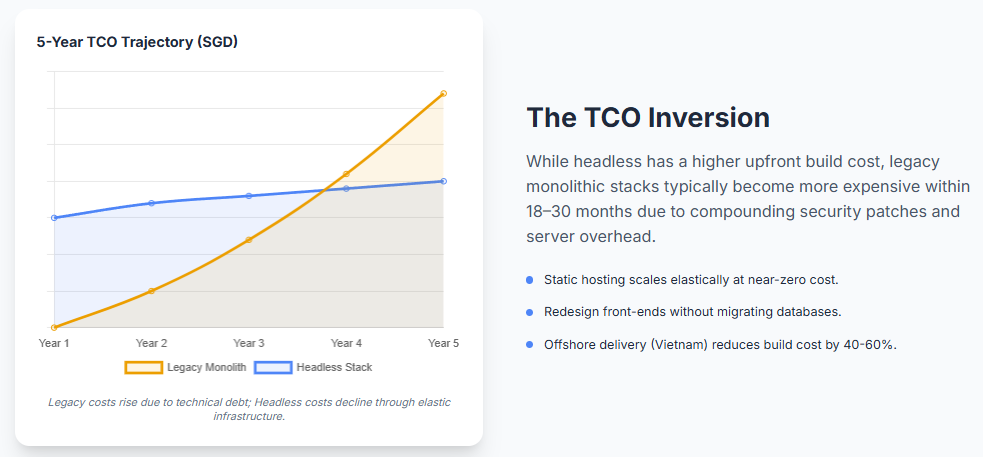
Table 2. Three-to-Five-Year Lifecycle TCO Comparison
| Financial Dimension | Legacy Monolithic CMS (e.g. WordPress, Drupal) | Decoupled Composable Headless |
|---|---|---|
| Year 1 Capital Outlay (Build) | Lower (indicative SGD 12,000 to SGD 25,000): Theme-based builds and marketplace plugins reduce upfront development hours. | Moderate to higher (indicative SGD 18,000 to SGD 80,000+): Bespoke frontend engineering, custom schemas, and edge pipeline setup. |
| Hosting & Compute Scaling | Higher and less predictable: Traffic spikes can require scaled application servers, dedicated database instances, and cache clusters. | Lower and more elastic: The frontend is prerendered and served from global CDN edge nodes, so the API origin handles a smaller share of traffic. |
| Security Maintenance & Patching | Ongoing overhead: Patchstack logged 11,334 new WordPress vulnerabilities in 2025, 91% of them in plugins. This calls for regular patching, staging regression tests, and security scanning. | Smaller public attack surface: The frontend runs as prerendered assets or stateless edge functions with no public database endpoint, and the backend can sit behind private subnets with SSO. The API, build pipeline, and third-party services still need patching and monitoring. |
| Brand Redesigns & Re-platforming | Larger rebuild effort: Presentation logic is often entangled with theme templates and database metadata, so a visual rebrand can require re-coding and data migration. | Minimal content migration: The content repository stays in place while the frontend is redesigned or replaced, without changing the underlying data models. |
| Omnichannel Expansion | Duplicate effort: Adding mobile apps or customer portals usually means building separate backend services or retrofitting REST plugins. | Reusable content: Native apps, wearables, and customer portals can consume the same structured API endpoints. |
| 5-Year Cumulative TCO Trend | Rising over time: Technical debt, security drift, plugin licensing, and server upgrades can add to long-term operating spend. | More predictable baseline: Upfront build capital amortizes over time, while maintenance depends on the quality of the frontend and pipeline you build. |
Teams still on WordPress can reduce the patching burden with the practices in our guide to optimizing WordPress website development, or hand day-to-day operations to managed IT services. If your enterprise is preparing to replace a legacy monolith, follow our playbook on enterprise CMS migration services to preserve SEO link equity, 301 redirect maps, and structured metadata during the transition.
Platform Selection by Budget & Operating Model
Platform choice directly affects licensing OpEx and developer efficiency. Drawing on Vinova’s delivery experience across 300+ projects, we match platforms to licensing budgets and governance requirements. Vendor pricing changes often, so confirm current figures on each vendor’s pricing page before budgeting. For a deeper architecture view, read our technical product manager’s guide to headless CMS development.
Table 3. Headless CMS Platforms by Licensing Model and Fit
| Platform | Licensing Model | Typical Monthly License | Best Architectural Fit | Vinova Delivery View |
|---|---|---|---|---|
| Payload CMS | Open source (MIT), self-hosted | No license fee for the core software; you pay for VPC hosting | Regulated enterprises, public sector bodies, and teams that require full code and database ownership. | Strong fit for regulated data: Self-hosting keeps data residency under your control, which supports PDPA transfer limitation and IM8 requirements. Compliance still depends on your hosting and controls. |
| Sanity | SaaS content platform (free tier plus usage-based) | Free plan; Growth at USD 15 per seat per month; Enterprise by quote | Complex bespoke relational data models, developer-led engineering teams, and real-time collaborative studios. | Strong fit for developer velocity: GROQ querying and visual source mapping suit developer-led teams. |
| Storyblok | Tiered SaaS subscription | Free Starter plan; Growth from 99 per month; Growth Plus from 349 per month; Premium by quote | Marketing-led organizations that want visual drag-and-drop component assembly out of the box. | Strong fit for marketing autonomy: A visual editor built for marketing teams who find plain form fields restrictive. |
| Strapi | Open-source community edition or Strapi Cloud | Free self-hosted core; Cloud plans are paid per project | Product squads building composable multi-channel web and mobile applications on Node.js. | Flexible composable hub: A broad developer ecosystem and no core license fee. |
| Contentful | Enterprise SaaS subscription | Free plan; paid plans from about USD 300 per month; Enterprise by quote | Global enterprises distributing structured content across many regional web properties and brand sites. | Enterprise standard: A higher license floor, with mature governance and multi-space scaling for distributed teams. |
Strapi vs Sanity Implementation Cost: Licensing vs Developer Hours
Strapi and Sanity are the two platforms buyers compare most often at the mid-market and enterprise composable tiers in Table 1. The licensing line looks very different, but the implementation cost is driven mostly by developer hours, hosting responsibility, and how much of the editorial experience you build yourself.
Table 4. Strapi vs Sanity: Where the Implementation Cost Sits
| Cost Factor | Strapi | Sanity |
|---|---|---|
| Licensing | Free self-hosted core; Strapi Cloud plans are paid per project. | Free plan; Growth at USD 15 per seat per month; Enterprise by quote. |
| Hosting & Operations | Self-hosted builds put hosting, upgrades, and backups on your team, which adds DevOps hours. Strapi Cloud shifts part of this to the vendor. | Content is stored in Sanity’s hosted Content Lake, so there is no backend server to run, but usage and seat costs recur. |
| Content Modeling | Content types are defined in the admin builder or in code, then exposed through REST or GraphQL. | Schemas are defined in code in the Studio and queried with GROQ or GraphQL, which suits developer-led teams. |
| Editorial Experience & Preview | Admin panel included; live preview still needs a preview bridge to the frontend. | Studio is highly customizable, and live visual editing also needs engineering effort on the frontend. |
| Where It Fits in Vinova Scoping | Typically the mid-market tier in Table 1. | Typically the enterprise composable tier in Table 1. |
In practice, Strapi tends to trade license savings for hosting and operations hours, while Sanity trades recurring platform fees for less infrastructure work. Which one costs less over three to five years depends on your seat count, traffic, and in-house DevOps capacity, so model both before you commit.
Performance ROI: Server Latency & Conversion Impact
Performance gains are one of the clearer financial returns from a headless build. Largest Contentful Paint (LCP) and Interaction to Next Paint (INP) are part of Google’s Core Web Vitals, and web.dev defines a good INP as at least 75% of page interactions responding in under 200 milliseconds. Results vary with hosting, caching, content model, and the code your team ships, so measure your own field data before and after any migration.
- Time to First Byte (TTFB): A monolith with page caching answers repeat requests quickly, then slows when uncached dynamic database queries reach the origin. An edge-deployed headless frontend serves prebuilt pages from the nearest CDN point of presence, which usually shortens TTFB. Google’s web.dev guidance suggests aiming for a TTFB of 0.8 seconds or less.
- Interaction to Next Paint (INP): React Server Components render non-interactive layout on the server, so client-side JavaScript payloads can shrink. That helps keep the main thread free for user input during heavy promotional periods. For audit methods, see our guide to improving Core Web Vitals.
- High-Concurrency Protection: During major campaigns, monolithic databases can hit connection exhaustion and table lock bottlenecks. A decoupled static layer absorbs most read traffic at the edge CDN, so far fewer requests reach your origin servers.
PDPA, IM8, and Cross-Border Compliance Budgeting in Singapore
For Singapore enterprises handling personal data, regulatory compliance is not a post-launch add-on. Retrofitting compliance onto a finished platform costs more than aligning the architecture during Sprint 1. The main regulatory mandates that shape CMS architecture include:
Table 5. Regulatory Standards and Their CMS Architecture Impact
| Regulatory Standard | Architectural Mandate for CMS | Vinova Engineering Implementation |
|---|---|---|
| PDPA Section 26 (Transfer Limitation) | Personal data may be transferred outside Singapore only if the recipient provides a standard of protection comparable to the PDPA. | Customer and transaction databases are designed to reside in AWS Singapore (ap-southeast-1). Offshore engineering hubs in Vietnam access staging environments through encrypted Virtual Desktop Infrastructure (VDI) with data exfiltration controls. |
| GovTech IM8 Directives | Administrative auditability, least-privilege RBAC, and controlled data egress for public-sector platforms. | Log aggregation across CMS administrative changes, multi-factor authentication (MFA), and no direct public database endpoints. |
| MAS TRM Guidelines | Technology risk management, data boundary isolation, and penetration testing expectations for financial entities. | Isolated presentation layers, end-to-end API encryption, and third-party vulnerability assessments before production sign-off. |
How Vinova’s Hybrid Delivery Model Supports Build Budgets
Delivery model is one of the biggest levers on headless implementation cost. Agency rates differ widely across the market, and staffing a build with unvetted contractors adds its own risks: inconsistent code quality, compliance gaps, and project abandonment. Vinova’s “One Team” hybrid model combines the accountability of a Singapore headquarters with the engineering capacity of Vietnam delivery hubs:
- Singapore Strategic & Architectural Governance: Solutions architects, technical project directors, and compliance leads based in Singapore work directly with your stakeholders, with requirements governed under Singapore law and SIAC arbitration.
- Vietnam Engineering Squads: 300+ in-house software engineers across Hanoi, Da Nang, and Ho Chi Minh City execute frontend and backend sprint backlogs under ISO 9001:2015 quality management and ISO 27001:2022 information security protocols.
- 35% to 45% Net Cost Efficiency: In Vinova’s delivery experience, enterprises receive government-grade architecture and delivery governance at a blended cost typically 35% to 45% below all-local agency rates, because senior architects handle schema, security, and compliance decisions while delivery squads handle build and test.
- Institutional Longevity: With 8% to 12% annual voluntary engineering attrition, the team that builds your content platform is still there to maintain, secure, and scale it.
For regional enterprises planning a broader technology transformation, see our roadmap on enterprise CMS development in 2026.
Frequently Asked Questions: Headless CMS Costs & Architecture
What is the realistic minimum budget for a professional headless CMS build in Singapore?
In Vinova’s scoping, a professional, production-grade headless CMS build in Singapore typically starts at SGD 18,000 to SGD 25,000. That covers a single-brand website on a headless CMS (such as Strapi or Payload), a decoupled Next.js frontend, responsive component design, automated edge caching, and essential integrations (CRM forms, analytics, SEO metadata). Proposals well below this range often omit preview bridges, security hardening, or automated regression testing.
Will moving to a headless CMS decrease our monthly infrastructure hosting bill?
In many cases, yes. Because headless frontends are prerendered and cached across edge CDN nodes, the origin backend handles less compute, so you can often provision smaller servers instead of load-balanced clusters sized for traffic spikes. Savings depend on your traffic, hosting, and the SaaS licenses you add, so model both sides before you commit.
How does a headless CMS impact content editor productivity?
Early headless systems slowed marketing teams by forcing them into abstract form fields. Modern composable builds address this with live visual preview bridges and drag-and-drop component slices (such as Storyblok’s visual editor or Sanity’s presentation tooling). When architected well, marketing teams can publish campaigns without developer tickets, while engineers keep control of backend schemas.
Can our existing monolithic content be migrated into a headless CMS without losing SEO rankings?
Yes, with planning. Migration scripts can extract posts, categories, user permissions, and custom fields through database queries or REST APIs and map them into your new headless schema. To protect search equity, engineers should implement one-to-one 301 redirect mappings, preserve URL structures, and make sure server-rendered meta tags match the legacy standard on the new frontend.
Architecting Your Enterprise Content Infrastructure with Vinova
Moving to a headless or composable content architecture is an investment in engineering velocity and brand agility, and how the platform is architected, hardened, and budgeted determines your return on capital. Vinova, a Singaporean Government-Grade Technology Partner, Made Accessible, has delivered more than 300 projects across custom software, web, mobile, data, AI and cybersecurity over 16 years. Vinova’s approach is built around accountability:
- Fiduciary Governance & Regulatory Alignment: Delivery operations certified under ISO 27001:2022 (Information Security) and ISO 9001:2015 (Quality Management) and GovTech Category 1B approved, with delivery designed to align with the PDPA, GovTech IM8 and MAS TRM expectations that apply to your sector.
- Singapore Corporate Governance: Master Services Agreements governed under Singapore law with SIAC arbitration, so IP ownership and accountability are defined before the first commit.
- Web and CMS Engineering Practice: Custom web application development covering platform selection, headless and composable builds, cost modeling, and ongoing hardening and operations.
- Engineering Depth: 300+ in-house engineers across Singapore and Vietnam delivery hubs in Ho Chi Minh City, Da Nang, and Hanoi, with 8% to 12% annual voluntary attrition, so the people who build your content platform are still there to run it.
Schedule a complimentary two-hour architectural roadmap consultation with our Singapore solutions team to audit your current content ecosystem and receive a transparent pricing breakdown for your transition.
Vinova: a Singaporean Government-Grade Digital Transformation Partner, Made Accessible. For 16 years, we have designed digital systems for 300+ companies and government agencies worldwide, backed by ISO 27001:2022 and ISO 9001:2015 certification and Singapore GovTech Category 1B approval.
300+ employees across offices in Singapore, Vietnam (Hanoi, Da Nang, Ho Chi Minh City), Norway (Oslo), and Thailand (Bangkok), scaling platforms and engineering capacity to serve clients across the globe.
Financial Times Top 500 High-Growth Companies Asia-Pacific 2026. Recognized among Singapore’s Top 100 Fastest-Growing Companies in 2024, 2025, and 2026.